The checks that protect your parent - most families never run them
Every Utah facility has a public inspection file. How Torrey families read it, the tour questions that matter, and the red flags that end a visit.
Assisted living near Torrey compares against a national median of $6,200 a month - and Utah's own median of $5,475, ranked #38 of 50 states.
Torrey, Utah has about 260 residents, and its care prices track the metro market and the state's rules - both covered on this page.
A semi-private nursing home room runs $9,581 a month at the 2025 national median - the number Torrey families weighing skilled care start from.
Staffing is the whole product: ask every community for its caregiver-to-resident ratio on nights and weekends - not the daytime tour number - and how long its current administrator has been in place. High turnover at the top is the most reliable early warning in this industry.
Every state licenses or certifies senior care facilities and publishes inspection results - Utah's agency is listed below. Before any deposit near Torrey, run every finalist through the state's records: complaint history, violations, and how the operator responded tell you more than any tour.



The 2026 numbers
| Care type | 2025 national median | What it covers |
|---|---|---|
| In-home care | $35/hour | Non-medical help at home - meals, bathing, companionship |
| Adult day care | $95/day | Daytime supervision and activities, evenings at home |
| Assisted living | $6,200/month | Housing plus daily-living help; care-level fees extra |
| Memory care | typically 20-40% above assisted living | Secured dementia care with higher staffing |
| Nursing home (semi-private) | $9,581/month | 24/7 skilled medical care |
| Nursing home (private room) | $355/day | Same care, private room |
Find senior care options near Torrey
These platforms show communities and home-care agencies near you with pricing guidance. Advisors are free to families - providers pay them, as they do this site.
Disclosure: this is an independent guide. If you connect with a provider through a link here, the platform may pay this site a referral fee. That fee never changes your price - and it never changes what the inspection records say.
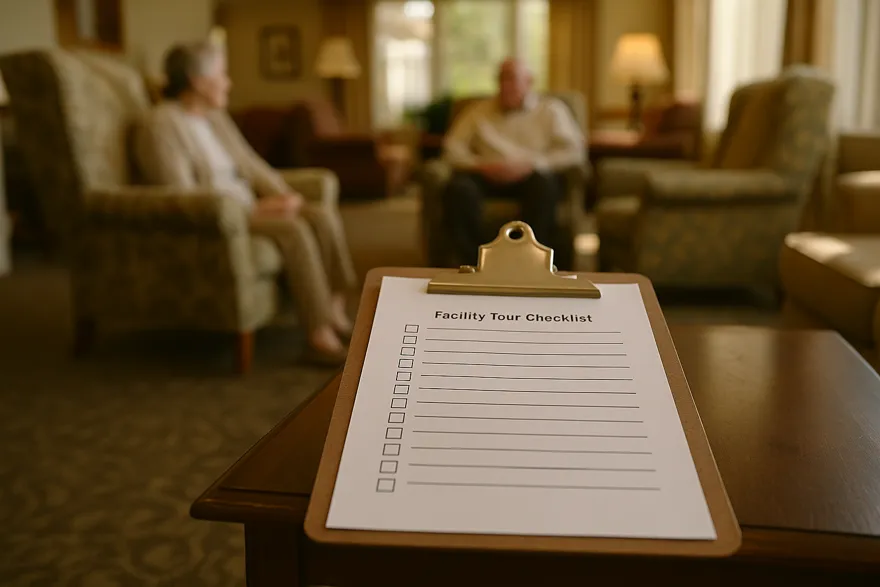
On the tour: what checks out - and what should end the visit
Good signs
- Staffing ratios for nights and weekends given plainly, in writing
- Administrator with years of tenure who knows residents by name
- Clean, current inspection file - and honest talk about past citations
- All-in pricing at your parent's assessed care level, itemized
- A straight, written answer to 'what happens when funds run out'
Walk away when you see
- Same-day discount pressure on a decision about your parent's life
- Ratio and turnover questions deflected with brochure language
- Base-rent quotes that get vague when care-level fees come up
- Unexplained citations in the state inspection file
- Midday common areas where residents sit unengaged and unattended
Verify before any deposit
- State license or certification current - check the agency linked on this page
- Inspection and complaint history for the last three years
- Staffing ratios in writing, including nights and weekends
- All fees itemized: base, care levels, medication management, move-in
- Discharge and eviction policy - the conditions under which they can ask your parent to leave
Utah: Medicaid, prices and the inspection file
| Question | Utah answer |
|---|---|
| Medicaid & assisted living | Yes - Utah Medicaid's New Choices Waiver (a 1915(c) HCBS waiver run by the Utah Dept. of Health and Human Services, Office of Long Term Services & Supports) covers 'adult residential services' and other supports for people who live in a licensed Type I or Type II assisted living facility, but like all HCBS waivers it does not pay room and board, which the participant pays from their own income. |
| State median, assisted living | $5,475/month (#38 of 50 states) |
| Licensing & inspection records | Utah Department of Health and Human Services, Division of Licensing and Background Checks (Office of Licensing) - health facility licensing |
Utah licenses two levels in statute: a 'type I' assisted living facility for residents who can exit the building without another person's help, and a 'type II' assisted living facility providing coordinated personal and health care services 24 hours a day in a home-like setting.
This guide is research, not advice: an independent summary of published costs and state rules. It is not a care provider, placement agency, law firm or financial advisor - care and Medicaid decisions deserve professional advice for your family's situation.

What this means for Torrey families
Home care keeps your parent in familiar surroundings and costs less at low hours; communities win on 24/7 coverage, social contact and predictable pricing. The wrong choice is usually the one made in a crisis - which is why running these numbers early matters more than getting them perfect.
This guide is research, not advice: an independent summary of published costs and state rules. It is not a care provider, placement agency, law firm or financial advisor - care and Medicaid decisions deserve professional advice for your family's situation.
Common questions
How much does in-home care cost?
About $35 an hour at the 2025 national median - roughly $80,000 a year at 44 hours a week. Since the 2025 survey, non-medical caregivers are tracked as a single category, so quotes for 'homemaker' versus 'home health aide' services should no longer differ much for non-medical help.
Does long-term care insurance actually help?
If your parent bought a policy years ago, yes - claim it early, as most policies have elimination periods before benefits start. Buying new coverage in one's 80s is generally not realistic. Check old files: policies bought decades ago are routinely forgotten and unclaimed.
What questions expose a bad facility fastest?
Three: What is the caregiver-to-resident ratio on nights and weekends? How long has the current administrator been here? What happens when private funds run out? Communities that answer all three plainly and in writing are the shortlist.
When should we start looking?
Before the crisis. Good communities near you have waitlists, and emergency placements take whatever bed is open at premium rates. Touring while your parent is stable costs nothing, builds the shortlist, and turns a future emergency into a phone call.
What fees do communities add on top of rent?
Care-level fees (assessed need tiers that can add $500-1,500+ monthly), medication management, and one-time community or move-in fees are the big three. Always compare communities on the all-in monthly number at your parent's assessed level - base rent alone is a marketing figure.
Find senior care options near Torrey
These platforms show communities and home-care agencies near you with pricing guidance. Advisors are free to families - providers pay them, as they do this site.
Disclosure: this is an independent guide. If you connect with a provider through a link here, the platform may pay this site a referral fee. That fee never changes your price - and it never changes what the inspection records say.