The four ways Duncannon families actually pay - and the one question to ask early
Savings, long-term care insurance, Pennsylvania Medicaid and veterans' benefits - most real plans combine two or three. The mix decides which doors stay open.
Assisted living near Duncannon compares against a national median of $6,200 a month - and Pennsylvania's own median of $6,480, ranked #21 of 50 states.
A semi-private nursing home room runs $9,581 a month at the 2025 national median - the number Duncannon families weighing skilled care start from.
In-home care averages $35 an hour nationally - about $80,080 a year at 44 hours a week for Duncannon households.
One question to ask every community up front: what happens when private funds run out? Some accept Medicaid after a private-pay period, many do not - and moving a frail parent later is the outcome everyone regrets.
Families pay for care from four buckets: personal savings and the home, long-term care insurance (for the minority who bought it in time), Medicaid (rules below), and for wartime veterans and spouses, VA Aid and Attendance. Most real plans combine two or three - and the mix determines which communities are realistic.


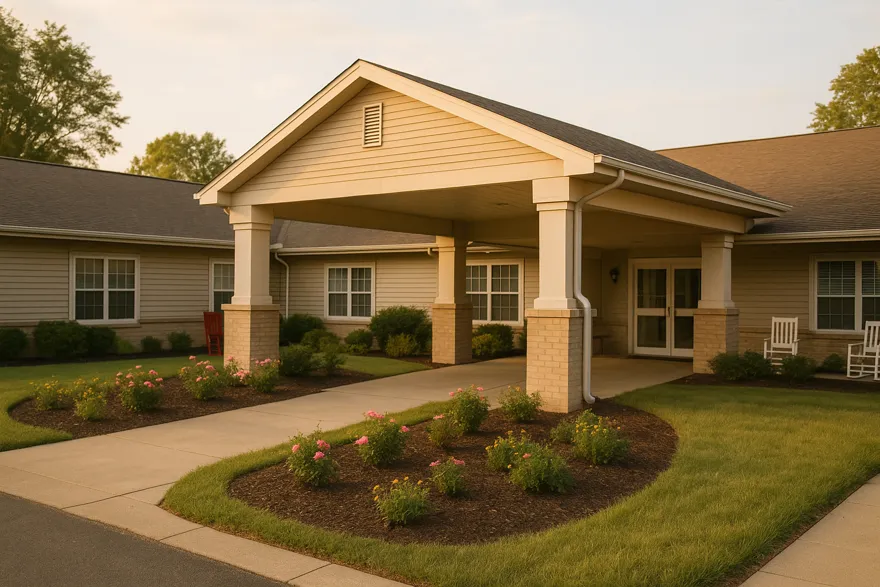

The 2026 numbers
| Care type | 2025 national median | What it covers |
|---|---|---|
| In-home care | $35/hour | Non-medical help at home - meals, bathing, companionship |
| Adult day care | $95/day | Daytime supervision and activities, evenings at home |
| Assisted living | $6,200/month | Housing plus daily-living help; care-level fees extra |
| Memory care | typically 20-40% above assisted living | Secured dementia care with higher staffing |
| Nursing home (semi-private) | $9,581/month | 24/7 skilled medical care |
| Nursing home (private room) | $355/day | Same care, private room |
Find senior care options near Duncannon
These platforms show communities and home-care agencies near you with pricing guidance. Advisors are free to families - providers pay them, as they do this site.
Disclosure: this is an independent guide. If you connect with a provider through a link here, the platform may pay this site a referral fee. That fee never changes your price - and it never changes what the inspection records say.
On every tour
- Won't give the caregiver-to-resident ratio for nights and weekends
- Administrator has been there under a year - top turnover predicts the rest
- Pressure to sign before you have seen the inspection file
- Quotes base rent only and gets vague about care-level fees
- Residents look unengaged at midday - activity calendars are marketing until you see them running
- Dodges the Medicaid question - 'what happens when funds run out' deserves a straight answer
What this means for Duncannon families
The home-versus-community math is mostly hours: in-home care at $35 an hour serves people who need help, not supervision. Past roughly 40 hours a week - or any point where safety needs someone present around the clock - assisted living at $6,200 a month usually costs less than equivalent home coverage.
This guide is research, not advice: an independent summary of published costs and state rules. It is not a care provider, placement agency, law firm or financial advisor - care and Medicaid decisions deserve professional advice for your family's situation.
Common questions
What is the difference between assisted living and a nursing home?
Assisted living provides housing plus help with daily activities - meals, medication, bathing - at a median $6,200 a month. Nursing homes provide 24/7 skilled medical care at a median $9,581 a month for a semi-private room. The dividing line is medical need: wound care, feeding tubes and ventilators are nursing-home territory.
How much does in-home care cost?
About $35 an hour at the 2025 national median - roughly $80,000 a year at 44 hours a week. Since the 2025 survey, non-medical caregivers are tracked as a single category, so quotes for 'homemaker' versus 'home health aide' services should no longer differ much for non-medical help.
Should my parent stay home with help or move to assisted living?
Run the hours math first: in-home care at about $35 an hour serves people who need help, not round-the-clock supervision. Below about 30-40 hours a week, home usually costs less; past that - or when safety needs someone always present - assisted living's $6,200 median often buys more coverage. The right answer follows the care needs, not the buildings.
Does long-term care insurance actually help?
If your parent bought a policy years ago, yes - claim it early, as most policies have elimination periods before benefits start. Buying new coverage in one's 80s is generally not realistic. Check old files: policies bought decades ago are routinely forgotten and unclaimed.
What is memory care and why does it cost more?
Memory care is assisted living specialized for dementia - secured areas, higher staffing, trained caregivers - and typically prices 20-40% above standard assisted living in the same market. If dementia is in the picture, ask specifically about memory-care rates and staff training, not the general rate.
Find senior care options near Duncannon
These platforms show communities and home-care agencies near you with pricing guidance. Advisors are free to families - providers pay them, as they do this site.
Disclosure: this is an independent guide. If you connect with a provider through a link here, the platform may pay this site a referral fee. That fee never changes your price - and it never changes what the inspection records say.
Prices in nearby cities
Duncansville · Dunlevy · Dunmore · Dupont · Duquesne · Duryea · Dushore · Eagles Mere · East Bangor · East Berlin · East Brady · East Butler